 how-to
Debt Collection Lawsuit Exemption Form: 2026 How-To Guide
Table of Contents
- Understanding the Debt Collection Lawsuit Exemption Form
- How to Stop Wage Garnishment with a Claim of Exemption
- Exempt Property in Debt Collection: What Creditors Cannot Take
- Claim of Exemption Form Template: What to Include
- Step-by-Step: How to File a Claim of Exemption
- What Happens After You File: Hearings and Next Steps
- Common Mistakes to Avoid When Filing an Exemption
- Frequently Asked Questions
Last Updated: September 11, 2026
Understanding the Debt Collection Lawsuit Exemption Form
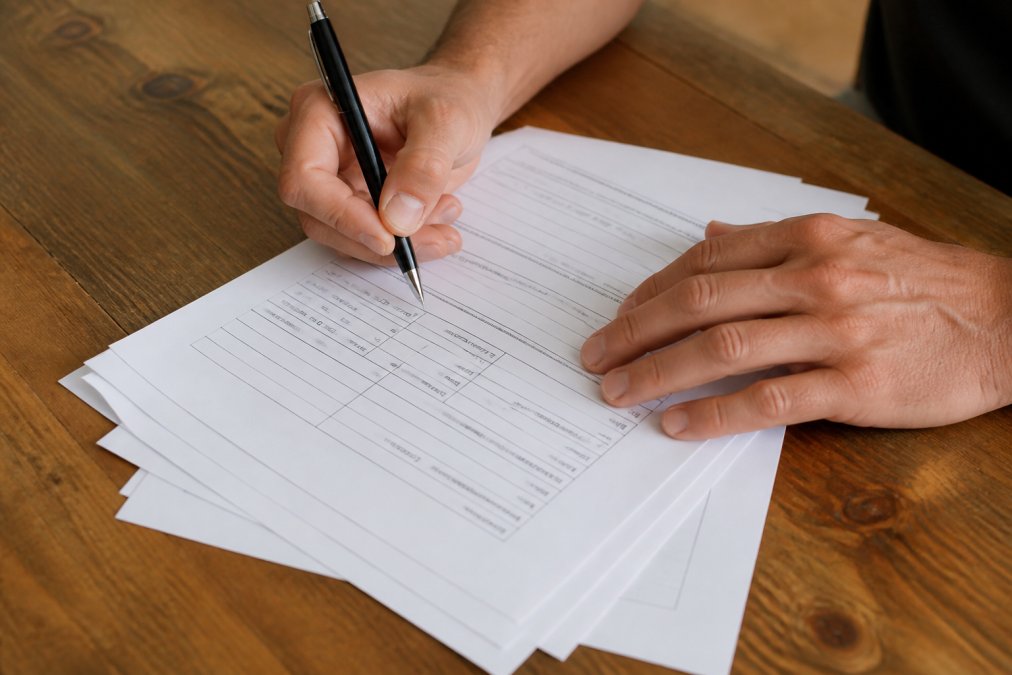
A debt collection lawsuit exemption form asks a judge to release protected income or property from garnishment or levy. Most states call this a claim of exemption, though some courts use notice of exemption or motion to quash. This guide covers protected property, how to complete the form, and what happens after you file.
The stakes are higher than most people realize. Once a judgment creditor holds a writ of execution, the sheriff or marshal can seize bank funds or divert part of your paycheck without warning. Filing an exemption form is the main lever a judgment debtor has to stop that. Consumer Financial Protection Bureau guidance on debt collection
How to Stop Wage Garnishment with a Claim of Exemption
The fastest way to stop wage garnishment is to file a claim of exemption with the court that issued the order, then serve a copy on the judgment creditor and the garnishee (usually your employer). Filing alone does not halt the garnishment, but it forces a hearing on your protected earnings.
Most states protect a portion of disposable earnings, the amount left after legally required deductions. Federal law sets a floor, and some states protect more (dol.gov). Check your state's statute or court self-help page before filling in the numbers.
Wage Garnishment vs. Bank Levy: Key Differences
| Feature | Wage Garnishment | Bank Levy |
|---|---|---|
| What it targets | Ongoing portion of your paycheck | Lump sum from your bank account |
| Who receives it | Your employer (the garnishee) | Your bank |
| Typical duration | Repeats each pay period | One-time seizure, can repeat |
| Exemption claim | Filed with issuing court | Filed with issuing court |
| Emergency relief | Possible motion to modify | Possible emergency motion |
Both require a valid judgment and a writ of execution. A bank levy is often more damaging because it can wipe out rent money in a single hit, so an emergency motion to unfreeze a bank account may be warranted.
Exempt Property in Debt Collection: What Creditors Cannot Take
Exempt property is income or personal property a judgment creditor cannot seize. Common categories include a portion of wages, basic necessities, certain retirement accounts, and public benefits such as Social Security or unemployment. The list is set by state law, so the categories below are a starting point, not a guarantee.
- A protected portion of disposable earnings
- Public benefits (Social Security, disability, unemployment)
- Retirement accounts, depending on state and account type
- Basic household furnishings and clothing
- Tools of the trade up to a state-set value
- A homestead exemption on your primary residence
Claim of Exemption Form Template: What to Include
A complete claim of exemption form template includes your identifying information, the case number, the property you claim as exempt, the legal basis, and your signature under penalty of perjury. Most courts provide a fill-in-the-blank version, but the substance below is what every version expects.
Finding the Right Form for Your Court
There is no single national claim of exemption form. The form you need depends on three things:
- Your state. Some states use a statewide form (for example, California uses form EJ-160 for wage garnishment exemptions). Others leave form design to individual courts.
- Your county or judicial district. Some courts have their own local forms with different field layouts and filing instructions.
- The type of collection. A wage garnishment exemption form may differ from a bank levy exemption form, even in the same court.
How to find yours:
- Start with your state's judicial branch website. Look for a "self-help" or "forms" section and search for "claim of exemption" or "exemption from garnishment."
- If there is no statewide form, go to the website of the court that issued your garnishment and look for "local forms" or "civil forms."
- Call the court clerk and ask: "What form do I use to claim an exemption from a wage garnishment in this court?" Write down the form number.
- If you cannot find a form online, ask the clerk whether the court accepts a written declaration instead.
Field-by-Field: What to Put in Each Section
Case caption. List the court name, case number, and parties. Copy the case number exactly from your garnishment notice or levy paperwork. If you do not have it, call the court clerk, do not guess.
Your identifying information. Name, address, phone number, and sometimes your date of birth or the last four digits of your Social Security number. Use the same name that appears on the judgment; if it has changed, note both.
Property description. Identify exactly what is being garnished or levied. For wage garnishment, list your employer's name and the amount withheld each pay period. For a bank levy, list the bank name, the account number (last four digits usually suffice), and the amount seized.
Exemption basis. Cite the specific state statute or federal law. For wages below the federal floor, cite 15 U.S.C. § 1673; for a state retirement exemption, cite your state's statute. If you do not know the number, describe the exemption in plain language and ask the clerk or a legal aid office for the citation.
Financial statement. Many courts require a statement of income, expenses, and dependents, gross income, take-home pay, rent or mortgage, utilities, food, transportation, and other necessary expenses. Attach pay stubs and bank statements as proof. If the form lacks this section, attach a separate sheet labeled "Financial Statement" with your case number at the top.
Declaration. A short statement of facts sworn under penalty of perjury, in plain language: "I am the judgment debtor in this case. My wages are being garnished by [creditor name]. I claim the following property as exempt: [describe]. The basis for my exemption is [state statute or federal law]. I declare under penalty of perjury that the foregoing is true and correct." Sign and date it.
Proof of service. After filing, mail a copy of your claim to the judgment creditor and the garnishee. The proof of service form lists their names and addresses, the mailing date, and your signature. A claim not served on the creditor can be dismissed.
What to Attach
- Pay stubs for the last two pay periods (or benefit award letters if you receive Social Security, disability, or unemployment)
- Bank statements for the last two months (if claiming a bank levy exemption)
- A copy of the garnishment notice or levy paperwork
- Any court order or judgment related to the case
Common Form Mistakes
- Leaving the exemption basis blank or writing "I need the money" instead of citing a statute
- Using the wrong case number (copy it from the garnishment notice, not from memory)
- Forgetting to sign and date the declaration
- Filing with the wrong court (use the court that issued the writ of execution)
- Not serving the creditor and garnishee, or serving them but not filing the proof of service
If you are unsure which form to use, call the court clerk before filling anything out, a five-minute call can save a denied claim and a wasted filing fee.
Step-by-Step: How to File a Claim of Exemption
Filing a claim of exemption follows a predictable sequence: get the form, complete it accurately, file it with the clerk, and serve every other party. Plan for roughly an hour of paperwork and a trip to the courthouse or an e-filing portal.

- Get the correct form. Download it from your court's self-help page or ask the clerk. Some states use a statewide form; others use county-specific versions.
- Complete every field. Use the case number from your garnishment or levy notice. Leave nothing blank.
- Attach supporting documents. Pay stubs, bank statements, and a financial statement if required.
- File with the court clerk. Ask about the filing fee and whether a fee waiver is available for low-income filers.
- Serve the creditor and garnishee. Mail copies and complete a proof of service form.
Serving the Creditor and Court Deadlines
Service on the judgment creditor and the garnishee is not optional. Mail copies to the addresses on the garnishment paperwork, then file your proof of service. Deadlines are strict and vary by state, often measured in days from the notice date. Check your state's rules or a court self-help page for the exact window.
What Happens After You File: Hearings and Next Steps
After the clerk stamps your claim of exemption, the case enters a time-sensitive phase. Knowing what happens next, and in what order, prevents the most common post-filing mistakes.
The Court's Processing Timeline
Once filed, the clerk dockets your claim and forwards a copy to the assigned judge. Most jurisdictions schedule a hearing within 10 to 30 days, though this varies by county and backlog. You will receive a hearing notice by mail at the address on your form. If your address changes after filing, notify the clerk immediately, a missed hearing notice is treated the same as failing to appear.
Some courts let you request a hearing date when you file; others set it automatically. Ask the clerk which practice applies.
What Happens at the Hearing
The hearing is usually brief, often 10 to 20 minutes. The judge will typically:
- Confirm your identity and the case. The judge verifies you are the judgment debtor named in the garnishment.
- Review your financial statement. If you submitted one, the judge examines your income, expenses, and dependents.
- Hear from the creditor. The judgment creditor or their attorney may argue the property is not exempt or that you have not proven your case.
- Ask you questions. The judge may ask you to clarify your income sources, the amount being garnished, or the legal basis for your exemption.
- Rule on the claim. The judge grants the exemption, modifies the garnishment amount, or denies the claim.
If the creditor fails to appear, the judge may grant your claim by default, but creditors frequently send representation, so do not count on it.
Preparing for the Hearing
Bring three copies of everything: your filed claim, supporting documents (pay stubs, bank statements, benefit award letters), and a written summary of your argument. Practice stating your case in two or three sentences: what is being garnished, why it is exempt, and what you want the judge to order.
Arrive 30 minutes early. Courtrooms often have security lines, and finding the right department can take time. Check the court's website the night before for any last-minute room changes.
If the Garnishment Continues While Your Claim Is Pending
Filing a claim of exemption does not automatically stop an ongoing garnishment in most courts. The garnishee, your employer or bank, must keep withholding until it receives a court order releasing the funds, so your paycheck may still be reduced while you wait for your hearing.
If the continued garnishment causes immediate hardship (for example, you cannot pay rent or buy food), ask the court for an emergency stay or temporary restraining order. Procedures vary by state and county: some require a separate motion and a showing of irreparable harm, others allow an oral request at an expedited hearing. Ask the clerk whether your court has an emergency motion procedure for exemption claims.
After the Judge Rules
If the judge grants your exemption, the court issues a written order. Serve a copy on the garnishee (your employer or bank) and the judgment creditor. The garnishee need not release funds or stop deductions until it receives the order, so follow up with payroll or your bank to confirm processing.
If the judge denies your claim, you may be able to appeal or file a motion for reconsideration, depending on your state's rules. Appeal deadlines are short, often 10 to 30 days. If you believe the judge made a legal error, consult a legal aid office or attorney promptly.
Impact on Your Credit
A common misconception is that filing a claim of exemption damages your credit. It does not. The claim itself is a procedural filing in an existing collection lawsuit; it is not a new debt, judgment, or delinquency. The judgment that led to the garnishment may already appear on your credit report, but the exemption claim does not add a separate negative mark. FTC consumer information on debt collection and credit
Sample Language for Communicating with Your Employer
After the court grants your exemption, you may need to notify payroll or HR. Here is a template:
"Dear [Payroll/HR], I am writing to inform you that on [date], the [court name] issued an order granting my claim of exemption in case number [case number]. A copy of the order is attached. Please update your records to stop the garnishment effective [date]. If you have any questions, please contact me at [phone/email]."
Keep a copy of the letter and court order. If your employer continues to garnish after receiving the order, follow up in writing and contact the clerk.
When to Get Help
If you are unsure whether your income qualifies as exempt, the creditor has an attorney, or you are close to a default judgment, consider consulting a legal aid office or an affordable attorney. WageHelpCenter provides comprehensive educational resources designed to help individuals navigate the complexities of debt collection lawsuits and wage garnishment. Our guides deliver essential information on legal options, settlements, and default judgments, empowering you to make informed decisions.
Common Mistakes to Avoid When Filing an Exemption
The most damaging mistake is missing the deadline. Courts treat late claims harshly, and a missed window can mean the garnishment stands. Other frequent errors include citing the wrong statute, failing to serve the creditor, and filing without proof of income.
- Filing with the wrong court (use the court that issued the writ)
- Leaving the exemption basis blank or citing a law that does not apply
- Skipping service on the creditor or garnishee
- Ignoring a court hearing notice
- Assuming the garnishment stops automatically the moment you file
Frequently Asked Questions
What happens if a debt collector sues you but you have no money?
If a debt collector wins a judgment but you have no income or assets, collection may be limited. Many states protect basic necessities and certain income from garnishment. You can file a claim of exemption to assert your rights. If you receive public benefits or your only income is Social Security, those funds are typically protected. Consult a legal aid attorney to understand your state's specific protections and whether you qualify for a hardship exemption.
How do I file a claim of exemption for wage garnishment?
To file a claim of exemption for wage garnishment, obtain the correct form from your local court clerk, complete it with details about your income and expenses, and file it with the court. You must also serve a copy on the judgment creditor or their attorney. Deadlines vary by state, so act quickly. Include documentation like pay stubs and bank statements. A claim of exemption form template can help you organize the required information before submitting to the court.
Can I stop a garnishment if my income is exempt?
Yes, if your income qualifies as exempt under federal or state law, you can stop a garnishment by filing a claim of exemption. Common exempt income includes Social Security, VA benefits, and certain disability payments. You must file the exemption form with the court and serve the creditor. The burden of proof is on you to show the funds are protected. An emergency motion may be needed if garnishment has already started.
What is the difference between a claim of exemption and a motion to vacate?
A claim of exemption asserts that certain property or income is protected from collection, while a motion to vacate asks the court to set aside a judgment or order entirely, often due to improper service or lack of jurisdiction. A claim of exemption is used after a judgment to protect specific assets. A motion to vacate challenges the judgment itself. Both require court filings and may involve a hearing. Consult a lawyer to determine which applies to your situation.
Facing a garnishment or levy with a deadline closing in is stressful, and the paperwork rarely makes it easier. WageHelpCenter exists to close that gap, with plain-English guides on debt collection lawsuits, wage garnishment, and settlement options that help you understand your rights before a judgment hardens into a garnishment. Get started with WageHelpCenter and walk into your hearing knowing exactly which forms to file and what to expect.