 how-to
How to Stop Wage Garnishment Quickly
Table of Contents
- What Wage Garnishment Is and How It Starts
- Immediate Steps to Stop Wage Garnishment
- Using Automatic Stay Bankruptcy to Halt Garnishment
- Understanding Wage Garnishment Limits Under Federal Law
- How to Negotiate a Debt Settlement and Avoid Garnishment
- Working With Creditors and Debt Management Plans
- Conclusion
Last Updated: August 11, 2026
What Wage Garnishment Is and How It Starts
Wage garnishment is a legal process where a court orders your employer to deduct a portion of your paycheck and send it directly to a creditor to satisfy a debt. This happens after a creditor wins a judgment against you in court. The process doesn't start overnight, it follows a specific legal sequence that gives you opportunities to respond and protect your income.
Here's how it typically unfolds: A creditor sues you for unpaid debt. You either respond to the lawsuit or don't. If you lose (or don't show up), the court issues a judgment. Once the creditor has that judgment, they can file a garnishment order with your employer. Your employer then withholds money from your paycheck until the debt is satisfied or the garnishment is lifted.
The key insight most people miss is that garnishment isn't inevitable. Multiple intervention points exist between the initial debt and the actual wage deduction. At WageHelpCenter, we help individuals understand these critical moments and the legal tools available to stop wage garnishment before it reaches your paycheck.
Understanding the mechanics matters because it reveals where your use lies. If you act early, before a judgment is entered, you have more options. If you wait until garnishment begins, your options narrow but don't disappear entirely.
Immediate Steps to Stop Wage Garnishment
The moment you receive notice of a lawsuit or learn about an active garnishment, time becomes your most valuable asset. The steps you take in the next few days can determine whether you stop the garnishment or spend months fighting it.
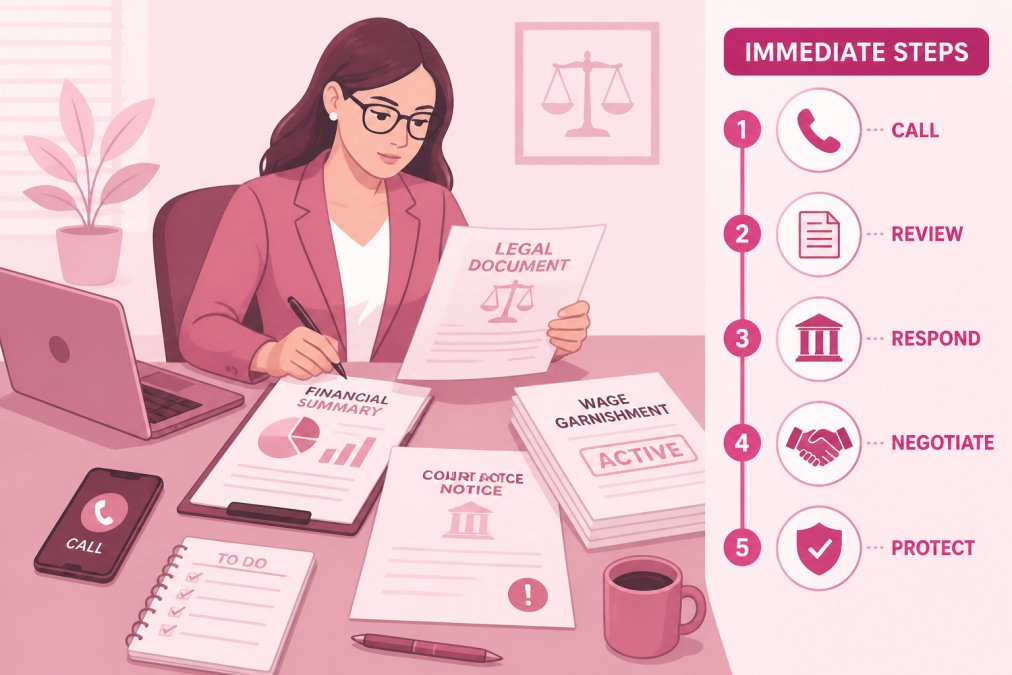
Step 1: Verify the Garnishment Order
Before taking any action, confirm that the garnishment order is legitimate and legally valid. Errors happen, sometimes garnishments are issued against the wrong person, contain incorrect amounts, or lack proper court authorization.
Request a copy of the garnishment order from your employer's payroll department. This document should include the creditor's name, the judgment amount, the court that issued it, and the case number. Verify that your name and Social Security number match exactly. Check the judgment date and ensure the statute of limitations hasn't expired for collecting the debt in your state.
Contact the court clerk's office listed on the order to confirm the judgment exists and is still enforceable. Many judgments have expiration dates, in some states, a judgment is valid for 10 years; in others, it's shorter. If the judgment has expired, the garnishment may be invalid.
Step 2: File a Claim of Exemption Form
A claim of exemption form is a legal document you file with the court to protect a portion of your earnings from garnishment. Federal law and state laws both provide exemptions that shield certain income from creditors.
Federal law limits wage garnishment to 25% of your gross weekly income or the amount by which your weekly earnings exceed 30 times the federal minimum wage, whichever is less. Many states offer additional protections that are more generous than federal limits.
To file a claim of exemption, obtain the form from your local court clerk's office or the court website. The form typically asks you to list your income, household expenses, dependents, and any other debts. You'll explain why the garnishment causes undue financial hardship and request that the court reduce or eliminate it.
File the form with the court and serve a copy on the creditor or their attorney. Follow the court's deadline, usually within 10-30 days of receiving the garnishment notice. Missing this deadline can forfeit your right to challenge the garnishment.
Include supporting documentation: recent pay stubs, rent or mortgage statements, utility bills, and proof of other essential expenses. The stronger your case for financial hardship, the more likely the court will grant the exemption.
Step 3: Challenge the Garnishment in Court
If the garnishment order itself is flawed, if proper legal procedures weren't followed, if you weren't served with the lawsuit, or if the creditor lacks standing to collect, you can challenge it directly in court.
File a motion to quash or vacate the garnishment order. This argues that the garnishment is invalid for procedural or substantive reasons. Common grounds include improper service (you never received notice of the lawsuit), lack of jurisdiction (the court had no authority to hear the case), or failure to follow proper debt collection procedures.
Attend the court hearing prepared with evidence. Bring copies of all documents related to the case: the original lawsuit notice, the judgment, the garnishment order, and any correspondence with the creditor. If you have proof that you were never properly served with the lawsuit, bring that documentation.
The burden of proof varies by jurisdiction, but generally, you must demonstrate that the garnishment violates your legal rights. An attorney can significantly strengthen your case, though you can represent yourself if you understand the specific procedural rules in your court.
Using Automatic Stay Bankruptcy to Halt Garnishment
The automatic stay is an immediate court order that stops most creditor collection activities the moment you file for bankruptcy. This includes wage garnishment. If a garnishment is actively reducing your paycheck, filing for bankruptcy can halt it within hours.
The automatic stay applies to both Chapter 7 and Chapter 13 bankruptcy. When you file, the court issues an order that creditors must cease all collection efforts. Your employer receives notice to stop withholding money from your paycheck. Any amounts already garnished may be recoverable, depending on your state's laws.
Chapter 7 bankruptcy liquidates your assets to pay creditors, and the remaining unsecured debt is discharged. Chapter 13 bankruptcy creates a repayment plan where you pay creditors over three to five years. Both stop the garnishment immediately.
The catch is that bankruptcy has serious long-term consequences for your credit and financial future. A bankruptcy filing remains on your credit report for 7-10 years. It affects your ability to obtain credit, rent housing, and sometimes even secure employment. Consider bankruptcy only if your overall debt situation is severe and other options have been exhausted.
Understanding Wage Garnishment Limits Under Federal Law
Federal law establishes a floor for wage garnishment protections, but state laws often provide stronger protections. Understanding both is essential to knowing how much of your paycheck is actually protected.
The federal limit is the lesser of two calculations: either 25% of your gross weekly earnings, or the amount by which your weekly income exceeds 30 times the federal minimum wage. At the federal minimum wage of $7.25 per hour, this means your weekly earnings must exceed $217.50 before any garnishment can occur.
Example: If you earn $500 per week, 25% would be $125. The second calculation (earnings minus 30 times minimum wage) would be $500 minus $217.50, which equals $282.50. The garnishment is limited to the lesser amount: $125 per week.
However, many states impose stricter limits. Some states protect a higher percentage of earnings or exempt certain types of income entirely. California, Texas, and several other states provide stronger protections than federal law. If your state law is more protective than federal law, the state limit applies.
Child support and alimony garnishments are treated differently, they can take up to 50% of disposable earnings if you're supporting another family, or 60% if you're not. Student loan garnishments have their own federal limits.
Research your specific state's garnishment laws. The difference between federal and state protections could mean hundreds of dollars per month in protected income. Contact your state's labor department or attorney general's office for current wage garnishment limits in your jurisdiction.
How to Negotiate a Debt Settlement and Avoid Garnishment
The most effective way to stop wage garnishment is to eliminate the underlying debt. Negotiating a debt settlement with the creditor or their collection agency can resolve the matter entirely, often for less than the full amount owed.
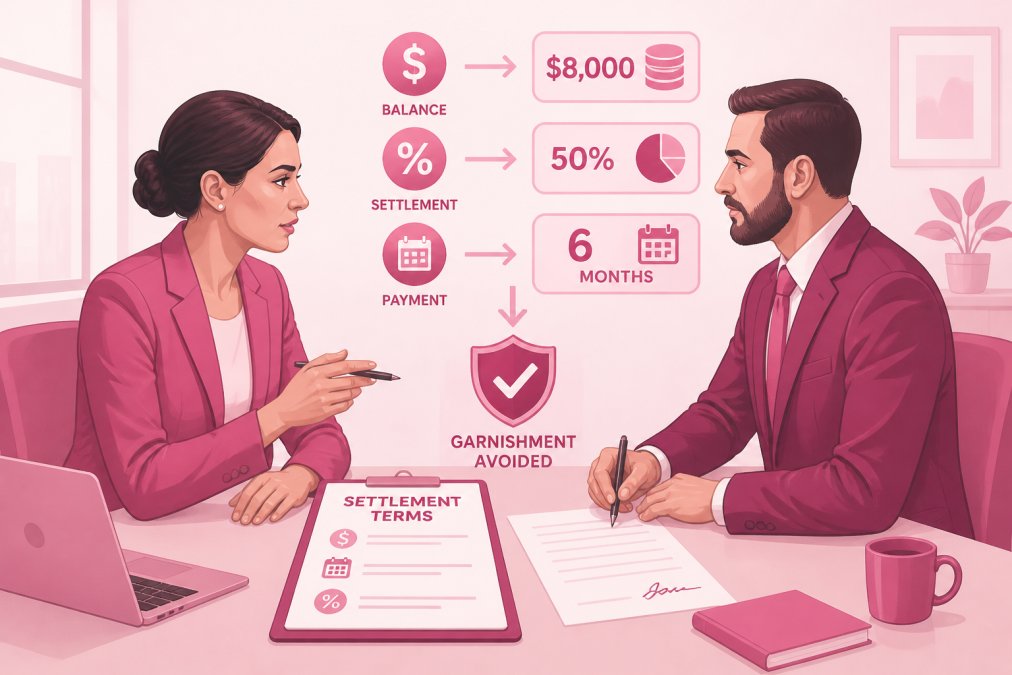
Before garnishment begins, creditors are often willing to negotiate. They prefer a settlement they know they'll collect over a prolonged garnishment process. Once garnishment is active, creditors become less flexible because they're already receiving money.
Contact the creditor or collection agency directly. Express your willingness to settle the debt for a reduced amount. Many creditors will accept 40-60% of the original debt to close the account quickly. Get any settlement offer in writing before paying anything.
Understand the tax implications: if a creditor forgives a significant portion of debt, the forgiven amount may be considered taxable income. Consult a tax professional before finalizing a settlement to understand your tax liability.
If you can't afford a lump-sum settlement, propose a payment plan. Offer monthly payments that fit your budget. Creditors sometimes accept structured settlements because they know they'll receive the full amount eventually, and you avoid the costs and hassle of ongoing garnishment.
Debt settlement companies exist, but many charge high fees and deliver questionable results. You can negotiate directly with creditors without paying a middleman. If you do work with a debt settlement company, verify they're legitimate and understand the fees involved.
A common mistake is assuming the creditor won't negotiate. Many will, especially if you initiate contact before judgment. The longer you wait, the less use you have.
Working With Creditors and Debt Management Plans
If settlement isn't possible, a formal debt management plan (also called a debt consolidation or repayment plan) can prevent garnishment and address your overall debt situation.
A debt management plan consolidates multiple debts into a single monthly payment. You work with a credit counselor (often through a nonprofit credit counseling agency) to create a realistic budget and negotiate with creditors to reduce interest rates or extend payment terms. The counselor then distributes your monthly payment to creditors according to the plan.
This approach has several advantages: you make one payment instead of many, interest rates often decrease, and you have a structured path to becoming debt-free. Most importantly, creditors who agree to a debt management plan typically agree to halt collection efforts, including garnishment.
The process typically takes 3-5 years to complete. Your credit score will be affected during the plan, but less severely than bankruptcy. Once you complete the plan, your credit begins recovering.
Find a legitimate nonprofit credit counseling agency. The National Foundation for Credit Counseling and the Financial Counseling Association maintain directories of accredited counselors. Avoid for-profit debt settlement companies that charge upfront fees or make unrealistic promises.
Working with creditors directly requires persistence and clear communication. Document all conversations and agreements in writing. If a creditor agrees to halt garnishment in exchange for payments, get that agreement in writing before making any payments.
Conclusion
Wage garnishment feels like a financial emergency because it is one, money disappearing from your paycheck creates immediate hardship. But garnishment is also a legal process with defined rules, timelines, and intervention points where you retain agency.
The critical realization is that you don't have to accept garnishment passively. Verifying the order, filing exemption claims, challenging invalid garnishments, negotiating settlements, and exploring bankruptcy are all legitimate tools. Which tool works best depends on your specific situation: the amount owed, your income level, your state's laws, and your overall debt picture.
WageHelpCenter provides comprehensive guides on each of these options, helping you understand your legal rights and navigate the debt collection process. Our educational resources clarify what garnishment is, how it works, and exactly what steps you can take to stop it, whether through exemption claims, settlement negotiations, or bankruptcy protection. The key is acting quickly. Every day you delay reduces your options. Get informed, understand your state's specific laws, and take action before garnishment becomes active on your paycheck.
Frequently Asked Questions
Can you stop a wage garnishment once it starts?
Yes, you can stop wage garnishment through several legal methods. Filing a claim of exemption form, challenging the garnishment order in court, negotiating a settlement with the creditor, or filing for bankruptcy with an automatic stay can all halt garnishment. The fastest option depends on your situation and whether you have grounds to dispute the garnishment. Acting quickly is critical, the sooner you file paperwork, the sooner the process can be reversed.
How do I file a claim of exemption form to stop wage garnishment?
A claim of exemption form must be filed with the court that issued the garnishment order, typically within 10-30 days of receiving the garnishment notice (deadlines vary by state). The form asks the court to declare certain income exempt from garnishment based on financial hardship, public benefits, or other legal protections. You'll need to provide proof of your income and expenses. File the original and copies with the court clerk and serve a copy on the creditor or their attorney. Missing the deadline can eliminate your right to claim exemptions.
Does filing for bankruptcy stop wage garnishment immediately?
Yes. Filing for Chapter 7 or Chapter 13 bankruptcy triggers an automatic stay, which immediately halts all collection efforts, including wage garnishment. The automatic stay goes into effect the moment your bankruptcy petition is filed, even before the court formally approves it. However, bankruptcy has serious long-term credit and financial consequences. It should be considered only after exploring other options like exemption claims, settlements, or debt management plans.
What is the maximum percentage a creditor can garnish from my paycheck under federal law?
Federal law limits wage garnishment to 25% of your disposable earnings (after taxes and mandatory deductions) or the amount by which your weekly earnings exceed 30 times the federal minimum wage, whichever is less. However, state laws may impose stricter limits, and some states allow no wage garnishment at all for certain debts. Additionally, certain income sources like Social Security, disability benefits, and child support are protected from garnishment. Your state's specific rules may differ, so check with your state's labor department or a legal professional.
This article was written using GrandRanker