 how-to
How to Respond to a Debt Summons: Step-by-Step
Table of Contents
- What a Debt Summons Actually Means (And Why It Matters)
- Statute of Limitations on Debt by State: Check Before You Respond
- Step-by-Step: How to Respond to a Debt Summons
- Debt Collection Lawsuit Answer Template: What to Include
- Common Defenses to Debt Collection Lawsuits
- Negotiation Strategies After You Receive a Debt Summons
- Filing Fees, Fee Waivers, and Your Credit Score During Litigation
- When to Get Legal Representation vs. Going Pro Se
Last Updated: August 2, 2026
Receiving a lawsuit in the mail is a gut-punch moment. Knowing how to respond to a debt summons is the single most important thing you can do in the days that follow, the clock starts the moment those legal papers arrive. At WageHelpCenter, we provide comprehensive educational resources designed to help individuals navigate the complexities of debt collection lawsuits and wage garnishment, and the biggest mistake we see is inaction. Below, we'll show you exactly how to file an answer, what defenses you can raise, and how to use negotiation to your advantage before a default judgment is entered against you.
A debt summons is a legal document issued by a civil court that formally notifies you that a debt collector or creditor has filed a lawsuit against you. It is not a warning. Ignoring it is the fastest route to a judgment that can freeze your bank account or trigger wage garnishment.
What a Debt Summons Actually Means (And Why It Matters)
A debt summons is a court-issued notice that you are now the defendant in a civil court case. It tells you who is suing you, which court has jurisdiction, and how many days you have to file your answer before a default judgment is entered. The summons does not prove you owe the debt, it proves the plaintiff filed a lawsuit. That distinction matters enormously.
Understanding the Summons and Complaint Documents
The summons and complaint are typically served together but serve different functions:
- The Summons is the official court notice naming the parties, identifying the case number, and stating your filing deadline.
- The Complaint is the plaintiff's legal argument listing allegations, the amount claimed, and the legal basis for the lawsuit.
Read the complaint line by line. Every numbered paragraph is an allegation you'll need to admit, deny, or state lack of knowledge about in your answer. According to Federal Trade Commission debt collection resources, debt collectors must provide verification of the debt upon request, which is relevant to how you evaluate the complaint's claims.
What Happens If You Ignore the Summons
Ignoring the summons results in a default judgment. The plaintiff's attorney files a motion for default, the court grants it without hearing your side, and suddenly you have a legal judgment against you. That judgment can be used to garnish wages, levy bank accounts, or place liens on property.
Statute of Limitations on Debt by State: Check Before You Respond
Before you write a single word of your answer, check whether the debt is even legally collectible. Every state sets a statute of limitations on debt, the window of time during which a creditor can sue to collect. Once that window closes, the debt may be time-barred, and you have a powerful affirmative defense.
The statute of limitations varies by state and by debt type. Credit card debt, medical debt, and written contracts each carry different timeframes depending on where you live. As documented in Consumer Financial Protection Bureau guidance on debt collection, time-barred debt is a frequent issue in collection lawsuits, and consumers who raise it as a defense often see cases dismissed.
Check the date of your last payment or last activity on the account. That date typically starts the clock.
How to Identify Zombie Debt
Zombie debt is old debt that has passed its statute of limitations but is being resurrected by debt buyers who purchase old accounts for pennies on the dollar. These collectors bet that you won't know your rights.
Signs you may be dealing with zombie debt include accounts several years old, debt buyers rather than original creditors, unfamiliar account details, and inflated amounts with added fees and interest.
If the statute of limitations has expired in your state, do not make a payment or acknowledge the debt. In many states, partial payment or written acknowledgment can restart the clock, making the debt collectible again.
Step-by-Step: How to Respond to a Debt Summons
Understanding how to respond to a debt summons comes down to four concrete steps.
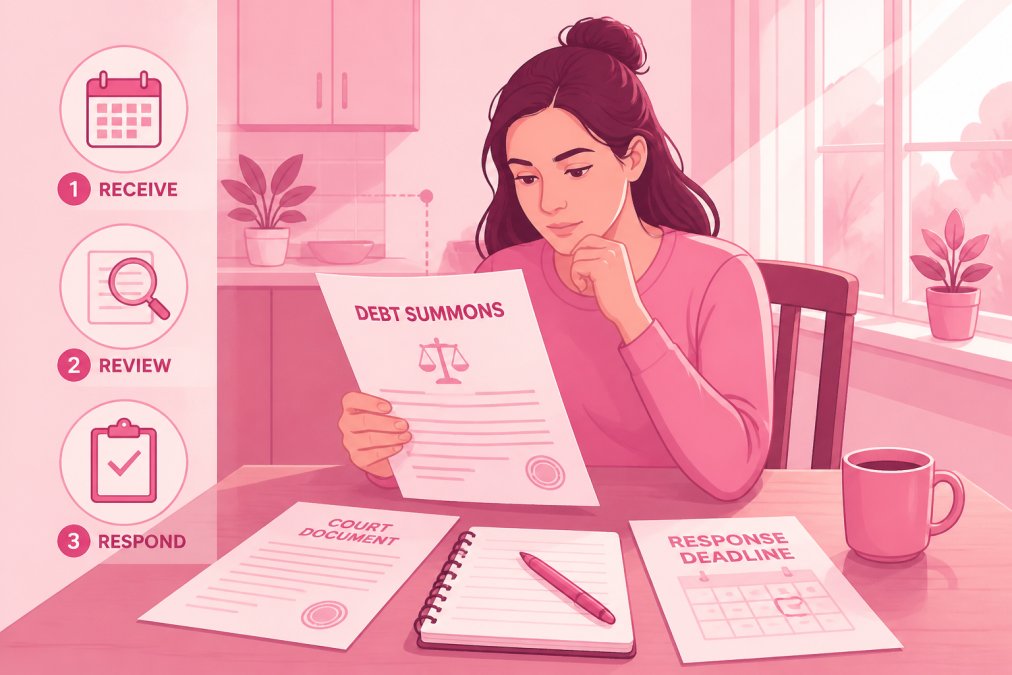
Step 1: Read the Complaint Carefully and Note Your Deadline
Your filing deadline is printed on the summons itself. Most states give defendants between 20 and 30 days from the date of service to file an answer with the court clerk. Count the days from the date you were served, not the date the lawsuit was filed. Mark the deadline on your calendar and work backward, you need at least three to five days before the deadline to prepare, file, and serve your answer.
Step 2: Decide Whether to Admit, Deny, or State Lack of Knowledge
Your answer responds to each numbered paragraph in the complaint. For each allegation, you have three options:
- Admit: You agree the allegation is true
- Deny: You dispute the allegation
- Lack of knowledge: You don't have enough information to admit or deny
Deny anything you cannot independently verify. Debt buyers often lack complete documentation, and forcing them to prove their claims is a legitimate litigation strategy.
Step 3: File Your Answer With the Court Clerk
Take your completed answer to the court clerk's office listed on the summons. You'll need the original answer plus copies (the clerk will specify how many), the filing fee or a completed fee waiver application if you qualify, and your case number from the summons. The clerk stamps your filing date on the answer and returns a copy to you. Keep it as proof of timely filing.
Step 4: Serve the Plaintiff and Obtain Proof of Service
Filing with the court is not enough. You must also serve the plaintiff's attorney with a copy of your answer. Most states allow service by first-class mail or certified mail. After mailing, complete a proof of service form, sign it, and file it with the court clerk. Without proof of service, the plaintiff's attorney may claim they never received your response.
Debt Collection Lawsuit Answer Template: What to Include
A strong answer follows a consistent structure:
- Caption block: Court name, case number, plaintiff name, your name as defendant
- Introduction: A one-sentence statement that you are the defendant and submit this answer
- Numbered responses: One response per numbered complaint paragraph (admit, deny, or lack of knowledge)
- Affirmative defenses: Any legal defenses you're raising (statute of limitations, lack of standing, improper service of process)
- Prayer for relief: A request that the court dismiss the case or rule in your favor
- Signature block: Your name, address, phone, date
Many civil courts post blank answer forms on their websites. Check your court's website before drafting from scratch.
Digital Filing vs. Paper Filing: Which Option Is Right for You
Many courts now offer electronic filing through their online portals. This offers real advantages: immediate confirmation of receipt, no travel to the courthouse, and a digital timestamp on your filing. Paper filing remains the only option in many smaller courts and rural jurisdictions. Call the court clerk's office directly to ask whether pro se defendants can e-file.
Method | Best For | Key Advantage | Watch Out For |
|---|---|---|---|
Digital e-filing | Courts with online portals | Instant confirmation, no travel | Technical errors near deadlines |
Paper filing | All courts, especially rural | Universal access | Requires in-person visit or mail |
Certified mail filing | When you can't appear in person | Creates delivery record | Add extra days for transit |
Common Defenses to Debt Collection Lawsuits
Affirmative defenses are legal arguments that, if proven, defeat the plaintiff's case even if the underlying debt exists. The most commonly used defenses include:
- Statute of limitations: The debt is too old to sue on under your state's law
- Lack of standing: The plaintiff cannot prove they own the debt or have the right to collect it
- Improper service of process: You were not properly served under your state's rules
- Debt already paid: You have documentation showing the debt was satisfied
- Identity error: The debt belongs to someone else
- Violation of the Fair Debt Collection Practices Act: The collector engaged in illegal collection practices
You don't need to prove every defense at the time you file your answer. Raising them preserves your right to argue them later. According to Federal Trade Commission Fair Debt Collection Practices Act overview, collectors who violate the FDCPA can face legal liability, which can sometimes be used in settlement negotiations.
Negotiation Strategies After You Receive a Debt Summons
Receiving a summons does not mean the case will go to trial. Most debt collection lawsuits settle before a court hearing, often for significantly less than the claimed amount. The key is filing your answer first, then negotiating from a position of strength.
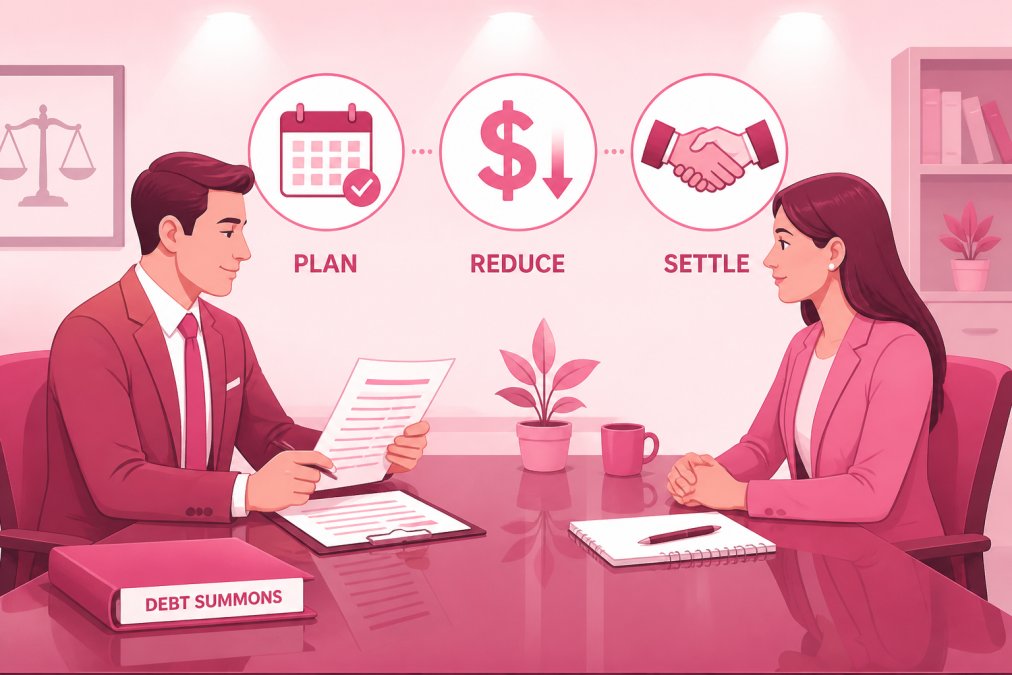
Debt buyers purchase accounts at a fraction of face value, meaning there's room to negotiate. Here's the practical approach:
- File your answer on time. Never negotiate before filing.
- Request debt validation in writing. Ask the plaintiff's attorney for a complete account history, the original credit agreement, and chain-of-title documents showing they own the debt.
- Make a written settlement offer starting at 30-50 cents on the dollar.
- Get any agreement in writing before paying. The settlement agreement should state the amount, confirm the debt is satisfied in full, and include a commitment to dismiss the lawsuit.
How a Settlement Agreement Can Resolve the Case
A settlement agreement is a legally binding contract between you and the plaintiff specifying the payment amount, timeline, and obligation to file a dismissal with the court. Once the court receives the dismissal, the lawsuit is over. Never make a payment without a signed settlement agreement in hand.
Filing Fees, Fee Waivers, and Your Credit Score During Litigation
Filing an answer with the court requires a fee that varies by court and lawsuit amount. If you cannot afford the fee, most courts offer a fee waiver, formally called an "in forma pauperis" application, based on your income and household size. Ask the court clerk for the fee waiver form when you arrive.
Your credit score during litigation deserves attention. The collection account is likely already on your credit report. However, a judgment entered against you is a separate, more serious negative item that can remain for years and make it harder to rent housing, secure employment, or obtain credit.
Resolving the case through settlement, even at a reduced amount, is generally better for your long-term credit picture than allowing a default judgment to stand. "Settled" is a far better status than "judgment entered."
When to Get Legal Representation vs. Going Pro Se
Going pro se means representing yourself in court without an attorney. It's legal, and many people do it successfully in debt collection cases. The procedural steps are manageable, the forms are often standardized, and the facts are frequently straightforward.
Some situations call for professional legal representation:
- The amount at stake is large enough to justify attorney fees
- The plaintiff's attorney is aggressive and filing multiple motions
- You have a strong FDCPA violation claim that could result in damages
- You're facing wage garnishment and need to protect exempt income
WageHelpCenter's educational resources are designed to help you understand your options clearly, whether you ultimately go pro se or connect with an affordable attorney. The honest answer is this: if the debt is small and the facts are simple, pro se is viable. If the case is complex or the stakes are high, an hour with a consumer law attorney is money well spent. Many consumer attorneys offer free consultations, and some take FDCPA cases on contingency.
Situation | Recommended Approach |
|---|---|
Small claim, clear facts, time-barred debt | Pro se with educational resources |
Large amount, aggressive plaintiff's counsel | Consult a consumer law attorney |
FDCPA violations by the collector | Attorney on contingency (often free) |
Wage garnishment already initiated | Immediate legal consultation |
First-time defendant, manageable amount | Pro se with guidance resources |
Frequently Asked Questions
What happens if I ignore a debt collection summons?
If you ignore a debt summons and miss your filing deadline, the civil court will almost certainly enter a default judgment against you. That judgment gives the debt collector the legal right to pursue wage garnishment, bank account levies, or liens on property. Responding to a debt summons, even with a simple denial, is the single most important step you can take to protect yourself. Once a default judgment is entered, reversing it is significantly harder than filing an answer in the first place.
Can I respond to a debt summons without a lawyer?
Yes. Filing an answer to a debt collection lawsuit without an attorney is called going pro se, and courts allow it. You will need to follow your local court rules, meet the filing deadline, and properly serve the plaintiff. Many people successfully file pro se answers using their court clerk's self-help resources or educational guides. That said, if the debt amount is large, the case is complex, or you have strong affirmative defenses, consulting a licensed attorney before your deadline is strongly advisable.
How long do I have to respond to a debt summons?
The response deadline varies by state and court type, but it is commonly between 20 and 30 days from the date you were served with the summons and complaint. Some states set shorter windows for small claims court. The deadline is printed on the summons itself, so read it carefully the day you receive it. Missing this deadline by even one day can result in a default judgment. Always verify the exact deadline with your local court clerk or the court's official website.
What are the most common defenses to debt collection lawsuits?
Common defenses to debt collection lawsuits include an expired statute of limitations on debt (meaning the debt is too old to be legally collected), lack of standing (the plaintiff cannot prove it owns the debt), insufficient evidence that you owe the amount claimed, identity errors, and violations of the Fair Debt Collection Practices Act. If the debt collector purchased the account from the original creditor, demanding a verified complaint with a complete chain of ownership is a legitimate defense strategy worth raising in your answer.
Does a debt collection lawsuit hurt my credit score?
The lawsuit filing itself does not appear on your credit report, but the underlying delinquent debt likely already has. If the plaintiff wins and a judgment is entered against you, that judgment can appear in public records and may be visible to future lenders even if it is no longer reportable under the Fair Credit Reporting Act's standard timelines. Resolving the case through a settlement agreement before judgment is entered can limit additional credit damage and give you more control over the outcome.
What should a debt collection lawsuit answer template include?
A basic debt collection lawsuit answer template should include your case number, the court name, the names of the plaintiff and defendant, a numbered response to each paragraph of the complaint (admitting, denying, or stating lack of knowledge), any affirmative defenses you are raising, your signature, and your contact information. Some courts require a specific form, so check with your court clerk first. Always keep a copy of everything you file, and obtain proof of service after serving the plaintiff.
This article was written using GrandRanker