 comparison
Debt Settlement vs Lawyer Fees: Compare Costs
Table of Contents
- Debt Settlement vs Lawyer Fees: Quick Comparison
- Understanding Debt Settlement Company Fees
- Attorney Costs for Debt Collection Lawsuit Defense
- How to Negotiate Debt with Creditors
- Debt Settlement vs Hiring a Lawyer: Pros and Cons
- When to Choose Each Option
- Protecting Yourself: Fee Transparency and Hidden Costs
- Conclusion
Last Updated: August 17, 2026
Debt Settlement vs Lawyer Fees: Quick Comparison
When facing debt collection lawsuits or significant outstanding debt, two main paths emerge: working with a debt settlement company or hiring an attorney. Understanding the real differences between debt settlement vs lawyer fees means recognizing which approach solves your specific problem.
At WageHelpCenter, we help individuals navigate these choices before judgment and wage garnishment become reality. Debt settlement companies negotiate directly with creditors to reduce what you owe. Attorneys defend you in court, negotiate on your behalf, or advise you on your legal rights when being sued. One approach reduces the debt itself; the other protects you legally. The costs, timelines, and outcomes differ significantly.
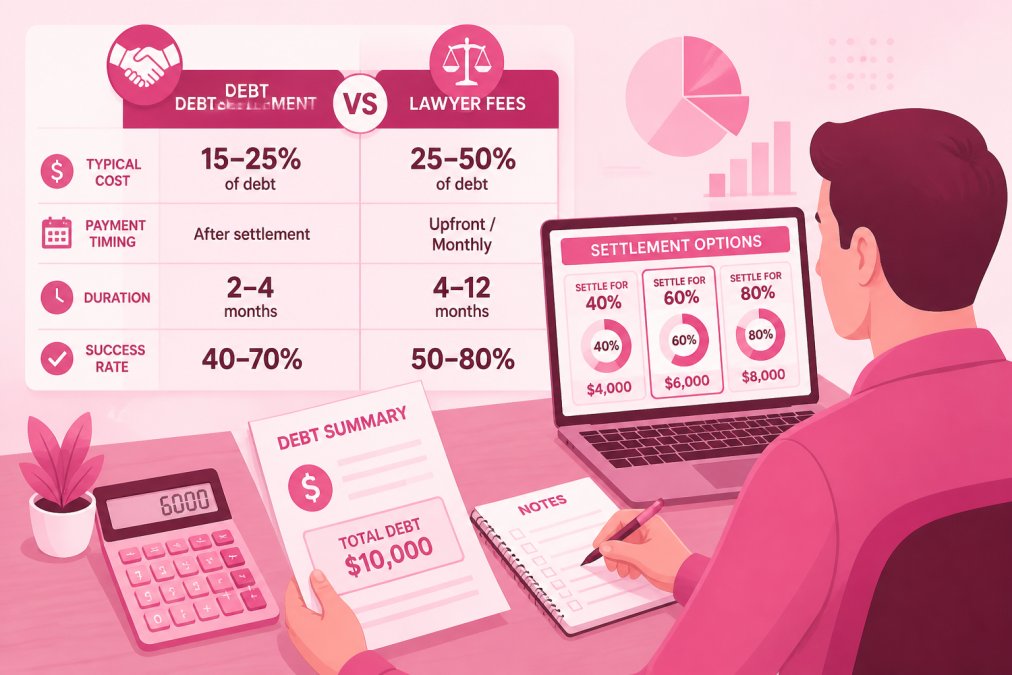
| Approach | How It Works | Best For | Cost Structure | Timeline |
|---|---|---|---|---|
| Debt Settlement | Negotiates reduced payoff with creditors | Unsecured debt (credit cards, personal loans) | 15-25% of settled amount | 24-48 months |
| Attorney Representation | Defends you in court or negotiates legally | Debt collection lawsuits, wage garnishment defense | Hourly, flat fee, or contingency | Varies by case |
| Credit Counseling | Debt management plan with lower rates | Willing to repay full debt with structure | Flat monthly fee ($39-$70/month) | 3-5 years |
Understanding Debt Settlement Company Fees
Debt settlement companies charge between 15-25% of the total debt you enroll, paid only after negotiating a settlement you approve. If you owe $20,000 and they settle for $12,000, their fee would be $3,000-$5,000, taken from that settlement amount. You'd pay the remaining $12,000 to the creditor, plus the settlement fee.
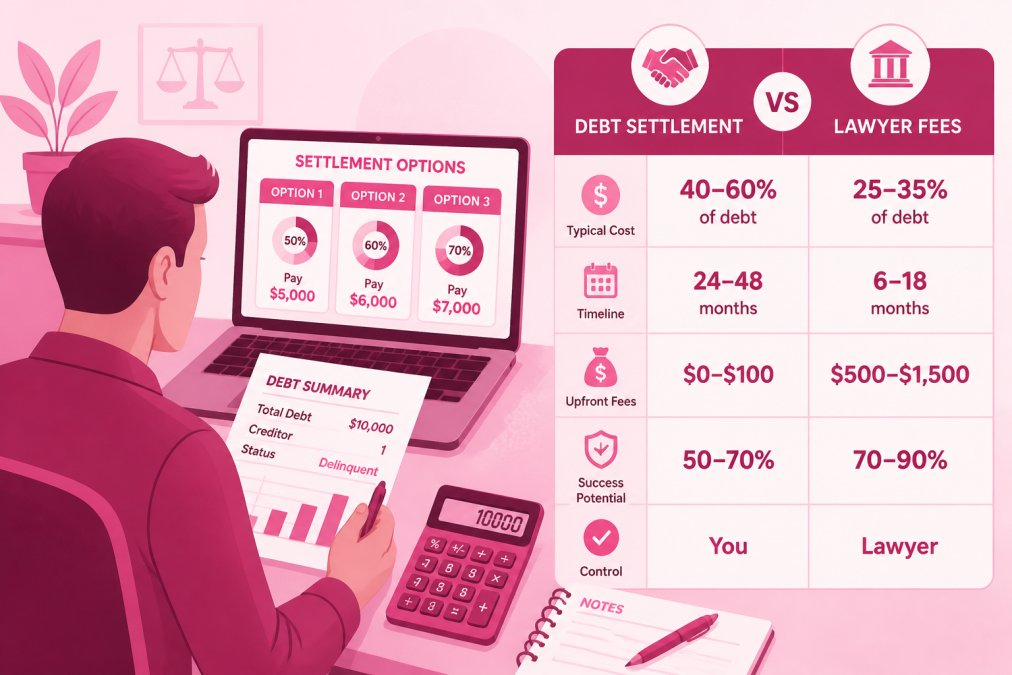
The process requires stopping regular payments to creditors and depositing money into a dedicated savings account. This accumulating balance is used during negotiations. Your credit score drops significantly during settlement, typically by 100-200 points. Creditors may sue before accepting settlement, and collection agencies can pursue aggressive tactics while negotiations proceed.
National Debt Relief and Freedom Debt Relief are the largest players. Both charge 15-25% of enrolled debt and typically complete programs within 24-48 months. National Debt Relief requires a minimum of $7,500 in qualifying debt; Freedom Debt Relief offers a program guarantee refunding fees if settlement and fees exceed your original debt.
Debt settlement only works for unsecured debt: credit cards, personal loans, medical bills. It doesn't apply to student loans, mortgages, or tax debt. If you're being sued for unpaid credit card debt, settlement can be effective. If you're facing wage garnishment or a default judgment, settlement won't stop the legal process already underway.
Attorney Costs for Debt Collection Lawsuit Defense
When a creditor files a lawsuit against you, an attorney's role shifts from negotiation to legal defense. Fee structures differ sharply from debt settlement.
Attorneys defending debt collection cases typically charge hourly rates, flat fees for specific services, or contingency arrangements (less common in debt defense). Hourly rates generally range from reasonable to several hundred dollars per hour. A flat fee might cover the entire defense from initial response through settlement or trial.
Legal representation in debt collection cases provides specific protections: filing a response prevents automatic default judgment, identifying violations of the Fair Debt Collection Practices Act or state consumer protection laws, and understanding statute of limitations rules. In many states, creditors cannot sue on debts older than a certain period, and an attorney can raise this as a defense.
If facing wage garnishment, an attorney advises you on your rights and helps you understand which wages are protected. They can negotiate payment plans that avoid ongoing garnishment and may help you file for relief if garnishment creates genuine hardship.
Hiring an attorney before a judgment is entered typically costs less and provides broader options. Waiting until after a default judgment weakens your legal position and limits the attorney's effectiveness.
How to Negotiate Debt with Creditors
Before committing to debt settlement or attorney representation, understanding direct negotiation options is essential. Many people settle debts without professional intermediaries.
Direct negotiation begins with understanding what you owe and to whom. Collect all documentation: original creditor names, current collection agency information, account numbers, and dates of last activity. Request debt validation from collection agencies; they're legally required to provide proof the debt is yours and the amount is correct.
When contacting a creditor or collection agency, offer a lump-sum settlement for less than the full amount. Many creditors accept 40-60% of the original debt if you can pay immediately. Explain your financial hardship honestly; creditors prefer settling with someone who can pay something now rather than chasing a judgment indefinitely.
Get any settlement agreement in writing before paying. It should specify the exact amount, payment date, and confirmation that the debt will be marked as "settled" or "paid in full" on your credit report. Without documentation, you have no protection if the creditor later claims you still owe the balance.
Legal leverage in negotiation depends on how old the debt is, whether the statute of limitations has passed, whether the creditor can prove the debt, and whether they've followed proper collection procedures. If the statute of limitations has expired in your state, creditors cannot sue you, though they can still attempt collection. An attorney can advise you on these specifics.
Debt Settlement vs Hiring a Lawyer: Pros and Cons
The decision hinges on your specific circumstances and what you're trying to achieve.
Debt Settlement Pros:
- Reduces total amount owed by 30-50%
- Performance-based fees mean you pay only if successful
- May stop creditor calls once negotiations begin
- Works well for multiple unsecured debts
- Faster resolution than litigation in some cases
Debt Settlement Cons:
- Requires stopping payments, damaging credit score significantly
- Creditors may sue before accepting settlement
- Fees of 15-25% reduce actual savings
- Takes 24-48 months to complete
- Doesn't address debts already in litigation
- Doesn't protect you legally if creditors file suit during the process
Attorney Representation Pros:
- Provides legal defense if being sued
- Identifies violations of consumer protection laws
- Prevents default judgments by filing timely responses
- Protects you from wage garnishment in many circumstances
- Negotiates from a position of legal strength
- Handles complex cases involving multiple creditors
Attorney Representation Cons:
- Hourly fees can accumulate quickly
- Doesn't reduce principal debt owed
- Requires upfront payment or retainer in many cases
- Less effective for debts not yet in litigation
- May be unnecessary for simple settlement situations
Debt settlement reduces what you owe but damages credit and exposes you to legal risk. Attorney representation protects you legally but doesn't reduce the debt; you still owe what you owe, though you may negotiate a payment plan.
When to Choose Each Option
Your situation determines which approach makes sense. The timeline of your debt and whether you're facing legal action are primary factors.
Choose debt settlement if:
- You have $7,500 or more in unsecured debt
- You haven't been sued yet
- You can afford monthly settlement account deposits
- You're willing to accept credit score damage for debt reduction
- You want to resolve multiple debts in one program
Choose attorney representation if:
- You've been served with a lawsuit
- You're facing wage garnishment or default judgment threat
- You need immediate legal defense
- You want to identify consumer protection violations or statute of limitations issues
- You're unsure whether the debt is legally valid
Choose direct negotiation or credit counseling if:
- Your debt is under $7,500
- You can negotiate directly with creditors
- You want to avoid credit damage and professional fees
- You can afford to repay full debt with a structured plan
- You're not facing immediate legal action
If already being sued, debt settlement becomes complicated because the creditor pursues legal action simultaneously. An attorney becomes necessary to handle the lawsuit while settlement negotiations proceed. If not yet sued, debt settlement may work, but understand the legal risks you're accepting.
WageHelpCenter helps you evaluate these scenarios and understand which path aligns with your situation.
Protecting Yourself: Fee Transparency and Hidden Costs
Before engaging a debt settlement company or attorney, understanding the complete fee picture is essential.
Debt Settlement Hidden Costs:
- Monthly account maintenance fees
- Interest and penalties accumulating while not making regular payments
- Court costs if creditors sue during settlement
- Tax liability: forgiven debt above $600 is reported to the IRS as taxable income
- Credit monitoring services sometimes bundled into programs
- Costs of defending against lawsuits filed before settlement
Attorney Fee Surprises:
- Court filing fees and service of process costs
- Expert witness fees
- Deposition costs if discovery occurs
- Appeal costs
- Hourly billing exceeding flat-fee estimates if cases become complex
- Retainer requirements not covering full scope of work
A fee transparency checklist before committing:
- Get the fee agreement in writing with all costs itemized
- Confirm whether fees are performance-based, hourly, flat, or contingency
- Ask about all potential additional costs
- Verify the timeline and what happens if the process takes longer
- Understand how fees are calculated and when they're due
- Ask what happens if outcomes differ from expectations
- Confirm the company's licensing and regulatory status
Credit counseling organizations like American Consumer Credit Counseling and Consolidated Credit are non-profit entities with regulated, transparent fees. ACCC charges $39 enrollment plus $7/month per account (capped at $70/month). Consolidated Credit charges an average of $40/month, capped at $79/month. These fees are significantly lower than debt settlement or attorney representation, though they don't reduce principal debt.
According to FTC guidance on debt relief services, companies cannot charge upfront fees before delivering results. State laws vary on what constitutes legitimate debt settlement or legal service fees. Understanding your state's rules protects you from predatory operators.
The choice between debt settlement and attorney representation isn't about which is universally "better", it's about which solves your actual problem. Debt settlement reduces what you owe but carries legal risk if sued during negotiations. Attorney representation protects you legally but doesn't reduce principal debt. Direct negotiation or credit counseling may suffice if your situation is simpler.
WageHelpCenter provides educational resources to understand these options, evaluate your circumstances, and locate affordable legal representation before judgment and wage garnishment complicate your situation. The sooner you understand your options and take action, the more control you maintain over the outcome.
Frequently Asked Questions
What is the main downside of debt settlement?
The primary downside of debt settlement is the negative impact on your credit score. Debt settlement companies typically require you to stop paying creditors while they negotiate, which causes missed payments to be reported. Additionally, fees range from 15-25% of the enrolled debt, and you may face creditor harassment during the settlement process. Some creditors may also pursue legal action before agreeing to settle, which could result in a judgment against you.
How much does it cost to hire a lawyer for debt settlement vs using a debt settlement company?
Attorney costs vary based on billing model: hourly rates typically range from $150-$400 per hour, while flat fees depend on case complexity. Debt settlement companies charge 15-25% of the settled debt amount, but only after a settlement is reached. Attorneys may charge retainer fees upfront, while debt settlement companies use performance-based fees. The total cost depends on your debt amount, case complexity, and negotiation timeline. Contact WageHelpCenter for guidance on finding affordable legal representation in your situation.
Is it worth fighting a debt collection lawsuit with an attorney?
Fighting a debt collection lawsuit with an attorney can be worthwhile if you have a valid defense, such as incorrect debt amount, expired statute of limitations, or creditor harassment. An attorney provides legal leverage in negotiations and can protect you from wage garnishment and default judgments. However, if you lack a strong defense, the cost may exceed settlement savings. Consult with an attorney to evaluate your specific case before deciding whether litigation defense is cost-effective for your situation.
What legal protections do I get by hiring an attorney versus using a debt settlement company?
An attorney provides fiduciary duty, meaning they must act in your best interest and maintain confidentiality. They can file motions to dismiss, challenge creditor claims, and defend against wage garnishment. Attorneys understand statute of limitations and consumer protection laws that debt settlement companies may not fully address. Debt settlement companies focus on negotiating reduced payoff amounts but lack legal authority to represent you in court. For legal defense and litigation risk mitigation, an attorney offers stronger protection than a settlement company.
This article was written using GrandRanker